|
I am a researcher working at the intersection of multimodal artificial intelligence, generative modeling, and spatial intelligence. My research focuses on building AI systems that can understand, generate, and reason across diverse modalities, with an emphasis on learning from and modeling complex real-world environments. Currently, I am a member of the GRIND Lab (Geospatial Responsible AI for Nature–Human Dynamics Lab) and the GISense Lab (Geospatial Intelligent Sensing and Mapping Lab). My work brings these AI directions into geospatial and environmental contexts, including natural hazards, disaster response, urban environments, and human-centered environmental perception. This interdisciplinary background motivates me to study how advances in artificial intelligence can be grounded in spatial, environmental, and real-world physical contexts. Looking forward, I am interested in extending these ideas toward world models, multimodal and agentic AI, and embodied intelligence. In particular, I am interested in AI systems that can move beyond perception and generation toward richer reasoning, interaction, and eventually action in complex physical environments. |

M.S. in Geography (GIST)
University of Tennessee, Knoxville 2025–2027 (Expected) · Fully Funded
B.E. in Computer Science
China University of Geosciences, Beijing 2021–2025 |
|
|
|
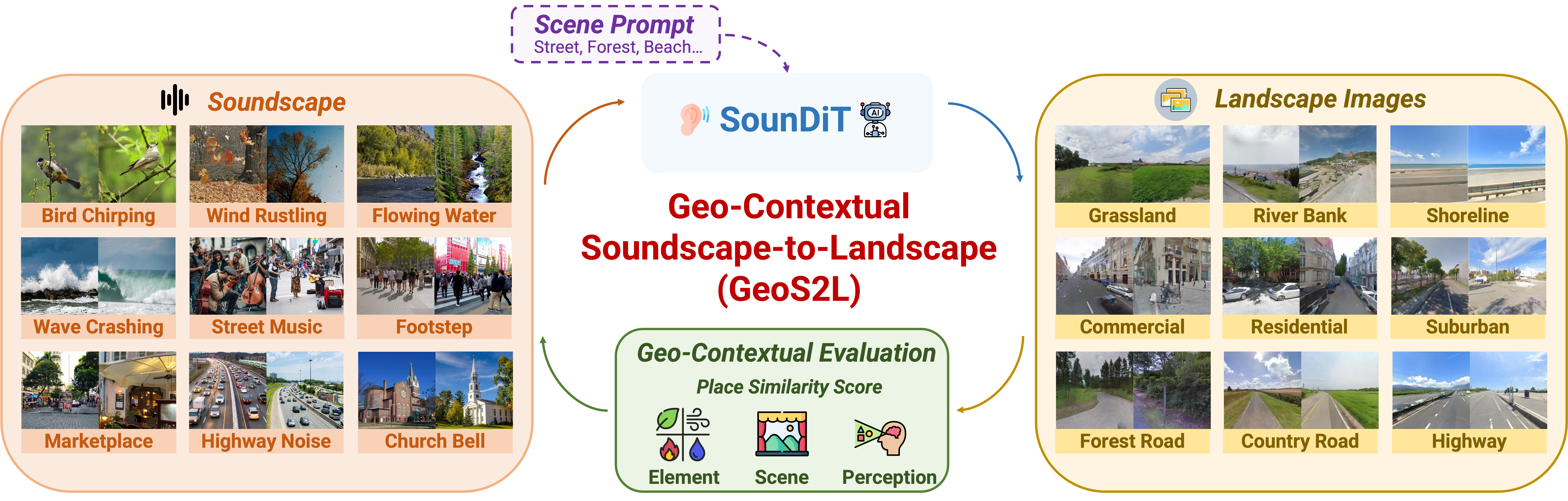
Junbo Wang*, Haofeng Tan*, Bowen Liao, Albert Jiang, Teng Fei, Qixing Huang, Bing Zhou, Zhengzhong Tu, Shan Ye, Yuhao Kang, Paper / Code We introduce Geo-contextual Soundscape-to-Landscape (GeoS2L) generation, a task that emphasizes geographic consistency. |
|
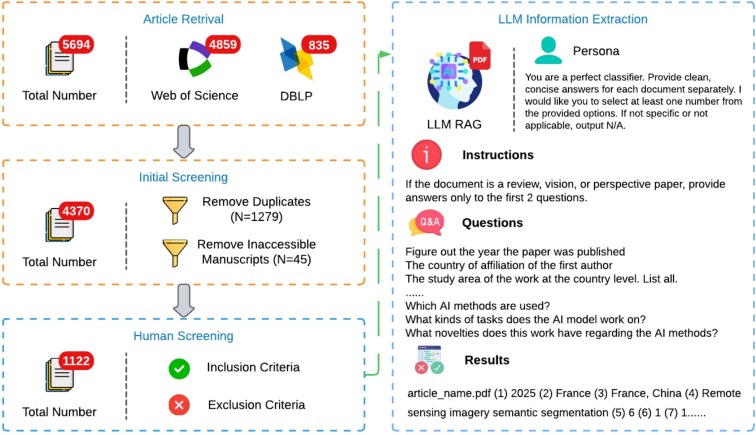
Bing Zhou, Xiao Huang, Siqin Wang, Gengchen Mai, Diya Li, Zhangyu Wang, Qiusheng Wu, Huan Ning, Junbo Wang, Qifan Wu, Yuhao Jia, Ruomei Wang, Shaokun Lyu, Bolong Tang, Zixin Huang Paper We systematically examine spatial explicitness in GeoAI and geospatial foundation models and provide a roadmap toward more spatially grounded artificial intelligence. |

|
Shan Qiao, Xingyu Fang, Junbo Wang, Ran Zhang, Xiaoming Li, Yuhao Kang Paper We use large language models to code maternal-health interviews for thematic analysis. |
|
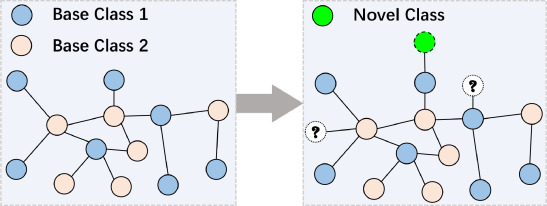
Zhengnan Li, Jun Fang, Junbo Wang, Xilong Cheng, Yuting Tan, Yunxiao Qin Paper We meta-train node-specific transformations to enable graph few-shot class-incremental learning. |